
China emphasises proper handling of differences and a long-term perspective for bilateral ties ahead of President Xi Jinping's visit to India for the BRICS summit and talks with Prime Minister Narendra Modi. The visit aims to stabilise relations following the 2020 Ladakh standoff and strengthen BRICS cooperation.

National security advisor Ajit Doval arrived in Beijing on Monday for a two-day visit to take part in the Special Representatives talks on the India-China boundary question with his Chinese counterpart and Foreign Minister Wang Yi.

China has cancelled drone shows and suspended drone flights across several provinces following a small plane crash in Beijing that raised significant security concerns, especially near top leadership compounds. This move signals a tightening of low-altitude aviation regulations, impacting the burgeoning "low-altitude economy" and civilian drone use, with new laws classifying illegal drone use as a public security threat.
National Security Advisor Ajit Doval is in Beijing for the 25th round of Special Representatives talks on the India-China boundary issue with his Chinese counterpart Wang Yi. These crucial discussions precede Chinese President Xi Jinping's anticipated visit to India for the BRICS summit, offering a potential opportunity for a meeting with Prime Minister Narendra Modi. The talks aim to address the long-standing border dispute and recurring tensions, with both sides emphasising the importance of peace and tranquillity for bilateral relations amidst recent reports of aggressive Chinese posturing in Arunachal Pradesh.

Foreign Secretary Vikram Misri held extensive discussions with China's Vice Foreign Minister Hua Chunying and other senior officials in Beijing, reviewing bilateral relations, trade, cultural exchanges, and emphasising peace and tranquillity in border areas. His visit aims to advance the vision of both nations as development partners.

Investigators have revealed that the pilot of a small plane that crashed into Beijing's tallest skyscraper, the CITIC Tower, suffered from long-term anxiety and had expressed suicidal thoughts in his diaries. The incident, which killed the pilot and injured 13 others, has raised significant security concerns in the highly sensitive Chinese capital, especially given strict airspace regulations.

A light sport aircraft crashed into Beijing's Citic Tower, the city's tallest skyscraper, prompting immediate evacuations. The incident occurred despite stringent airspace regulations in the Chinese capital, with details on casualties and the aircraft's origin still unclear.

A light sport aircraft crashed into Beijing's Citic Tower, the city's tallest skyscraper, causing an immediate evacuation and scattering debris. The incident, which occurred in the prominent business district, has raised concerns, with authorities yet to comment and the origin and circumstances of the crash remaining unknown. The aircraft was identified as a Sunward SA60L Aurora, and the crash highlights recent stringent regulations on recreational flying in Beijing's airspace.
Investigators have revealed that the pilot of a small plane that crashed into Beijing's tallest skyscraper, the CITIC Tower, suffered from long-term anxiety and had expressed suicidal thoughts in his diaries. The incident, which killed the pilot and injured 13 others, has raised significant security concerns in the highly sensitive Chinese capital, especially given strict airspace regulations.

China has strongly rejected a US bill that would impose tariffs on countries, including India, for purchasing Russian oil and gas. Beijing views the "Lindsey O Graham Sanctioning Russia and Iran Act 2026" as an act of "long-arm jurisdiction" and interference in its sovereign trade relations, asserting that its economic cooperation with other nations is based on equality and mutual benefit.

Global indoor fitness race organisation Hyrox has changed its rules after women's World record holder Joanna Wietrzyk soiled herself during an event in Beijing but was allowed to continue and win the race, prompting an apology from co-founder Moritz Fuerste.

Chinese President Xi Jinping is set to visit the United States from September 23 to 25 for summit talks with US President Donald Trump, with discussions expected to cover critical economic and trade issues, including AI, and the recently signed US sanctions law targeting countries buying Russian oil and gas.

Xi brought in asymmetrical power play by stating that India should have 'strategic cognition' and 'strategic judgement made on the basis of the stage of development the two countries are at'. This is a very nuanced way of asserting China's coercive diplomatic posture and reflects Beijing's penchant to unleash border instability at will, restrict rare earth metal exports, exert pressure on India at global and regional orders, asserts China expert Srikanth Kondapalli.

Novak Djokovic, the 24-time Grand Slam champion, has announced his return to the China Open after an 11-year absence, seeking to regain form after a surprising first-round exit at the US Open.
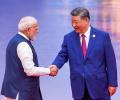
Ahead of Xi Jinping's visit, National Security Advisor Ajit Doval and Chinese Foreign Minister Wang Yi held extensive talks in Beijing on August 25 on the boundary issue and reached an eight-point consensus.

Members of the Tibetan community in exile held a symbolic protest march in Delhi's Majnu Ka Tila ahead of Chinese President Xi Jinping's visit to India for the BRICS 2026 Summit, voicing opposition to Beijing's policies in Tibet.
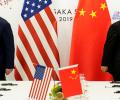
Top US and Chinese officials, including Vice Premier He Lifeng and Treasury Secretary Scott Bessent, held "candid, in-depth and constructive" talks in New York on economic and trade issues, with a specific focus on artificial intelligence. These discussions precede Chinese President Xi Jinping's anticipated visit to Washington and occur amidst new US sanctions targeting countries purchasing Russian oil and gas, and the US unveiling an "AI Force."

Glimpses from Donald Trump and Xi Jinping's ceremonial Beijing engagement capture diplomacy, symbolism and statecraft at historic Chinese landmarks.

Chinese President Xi Jinping is in New Delhi for the 18th BRICS Summit, where he is scheduled to hold bilateral talks with Prime Minister Narendra Modi. This visit, his first to India in nearly seven years, comes amidst efforts to normalise India-China relations following the 2020 Eastern Ladakh standoff and is expected to have significant implications for bilateral ties and BRICS cooperation.

Chinese President Xi Jinping's upcoming visit to India for the BRICS summit is a pivotal diplomatic event poised to significantly impact bilateral ties and global cooperation amidst ongoing international instability.

China's communist party has expelled two senior military officials, including General Zhang Youxia, the highest-ranking People's Liberation Army officer, for serious discipline and law violations.

United States Treasury Secretary Scott Bessent has warned that Iranian airlines could be effectively shut out of international travel from Wednesday, September 23, as Washington threatens secondary sanctions against foreign companies that continue providing services to Iran's carriers.

United States President Donald Trump boards Air Force One for his return home following diplomatic engagements in Beijing.

In recent years, China and Russia have pushed for de-dollarisation within BRICS, which India has resisted. One reason is that India does not want to hurt its relationship with the United States, and another is the fear of China controlling trade because the renminbi is considered the strongest currency in the bloc today.

China's Tiangong Ultra humanoid robot has set a new 100-metre sprint record of 8.86 seconds at the World Humanoid Robot Games in Beijing, significantly surpassing Usain Bolt's human world record of 9.58 seconds.

The Philippines Tennis Association has requested a WTA exemption for Alexandra Eala to participate in the Asian Games, which clashes with the mandatory China Open.

Nairobi, Kenya, has been selected to host the 2029 World Athletics Championships, marking the first time an African city will stage the prestigious event. World Athletics also announced Munich as the host for the 2031 championships. This decision follows Nairobi's previous unsuccessful bid for 2025 and highlights Kenya's strong connection to athletics.

The Ministry of External Affairs (MEA) has issued a warning against 'malicious' and 'misleading' social media posts concerning the health of world leaders, specifically Chinese President Xi Jinping and South African President Cyril Ramaphosa, who attended the recent BRICS Summit in New Delhi. The warning comes amidst unverified claims about Xi's health and an official statement from Ramaphosa's office confirming his withdrawal from public engagements due to ill health.

A humanoid robot named Lightning, developed by Chinese smartphone maker Honor, has reportedly run 100 meters in 9.32 seconds, surpassing Usain Bolt's human world record.

New Delhi was told it had given something up; in reality it had stopped talking about it, notes Dr Abhishek Puri.

Indian and Chinese armies held their first high-level commanders' flag talks in the Arunachal Pradesh sector, following Special Representatives dialogue. These talks, aimed at maintaining peace along the Line of Actual Control, occurred amidst reports of aggressive military posturing and just days before Chinese President Xi Jinping's visit to India for the BRICS summit.

Former CDS Anil Chauhan stated that China poses a long-term and comprehensive challenge to India, with the boundary issue remaining unresolved due to differing perceptions of the Line of Actual Control. However, he emphasised that India's ties with Beijing cannot be solely defined by border disputes, advocating for engagement through platforms like SCO and BRICS. He also highlighted the broader global geopolitical flux and instability in India's neighbourhood as significant security concerns, stressing the need for self-reliance.

A Chinese humanoid robot, Tiangong Ultra, achieved a remarkable feat by running the 100 metres in 8.64 seconds, surpassing Usain Bolt's human world record. This achievement occurred at the second World Humanoid Robot Games in Beijing, showcasing significant advancements in robot mobility and embodied artificial intelligence. The event highlighted the rapid progress in robotics, with spectators noting improved capabilities and developers seeing it as a crucial test bed for future applications.

India's Ministry of External Affairs reported that 320 Indians are missing and 400 are stranded on the Chinese side following devastating flash floods along the Nepal-Tibet border. India is actively involved in rescue efforts, sending relief supplies to Nepal and coordinating with Chinese authorities for the evacuation of its citizens. External Affairs Minister S Jaishankar reviewed the situation, emphasising the priority given to the well-being of Indian nationals.

China Southern Airlines is set to resume its Guangzhou-New Delhi passenger service from September 21, ending a six-year suspension. This move is part of a broader normalisation of India-China relations, following recent high-level diplomatic meetings and previous flight resumptions by other carriers.
National Security Advisor Ajit Doval engaged in Special Representatives talks with Chinese Foreign Minister Wang Yi in Beijing, focusing on the India-China boundary question and enhancing bilateral relations. These crucial discussions precede Chinese President Xi Jinping's anticipated visit to New Delhi for the BRICS summit, aiming to address persistent border differences and stabilise ties strained by past conflicts like the Galwan Valley clash.

Prime Minister Narendra Modi conveyed to Chinese President Xi Jinping that peace and tranquillity along the frontier remains an "essential" basis for the development of India-China relations, even as the two leaders welcomed "steady progress" in bilateral ties during their talks on the sidelines of the BRICS summit.

Prime Minister Narendra Modi, in bilateral talks with Chinese President Xi Jinping, emphasized that both nations must show sensitivity to each other's core issues and be guided by mutual respect, sensitivity, and interest. Modi highlighted the critical importance of peace and tranquillity along the Line of Actual Control for the development of India-China relations, while also addressing concerns regarding Taiwan and Tibet.

India and China are in what experts call 'a cooperation-versus-competition situation'.

China has called for stronger global governance of artificial intelligence, advocating for international cooperation to develop the technology for humanity's benefit while preventing it from getting out of control. This comes amidst warnings from leading AI researchers in the US about potential existential risks, with China emphasizing both rapid development and robust safeguards, including its new AI Safety Governance Framework 3.0. The issue is expected to be a key topic in upcoming US-China talks.
